GZDoom Cross-Hatch Shader
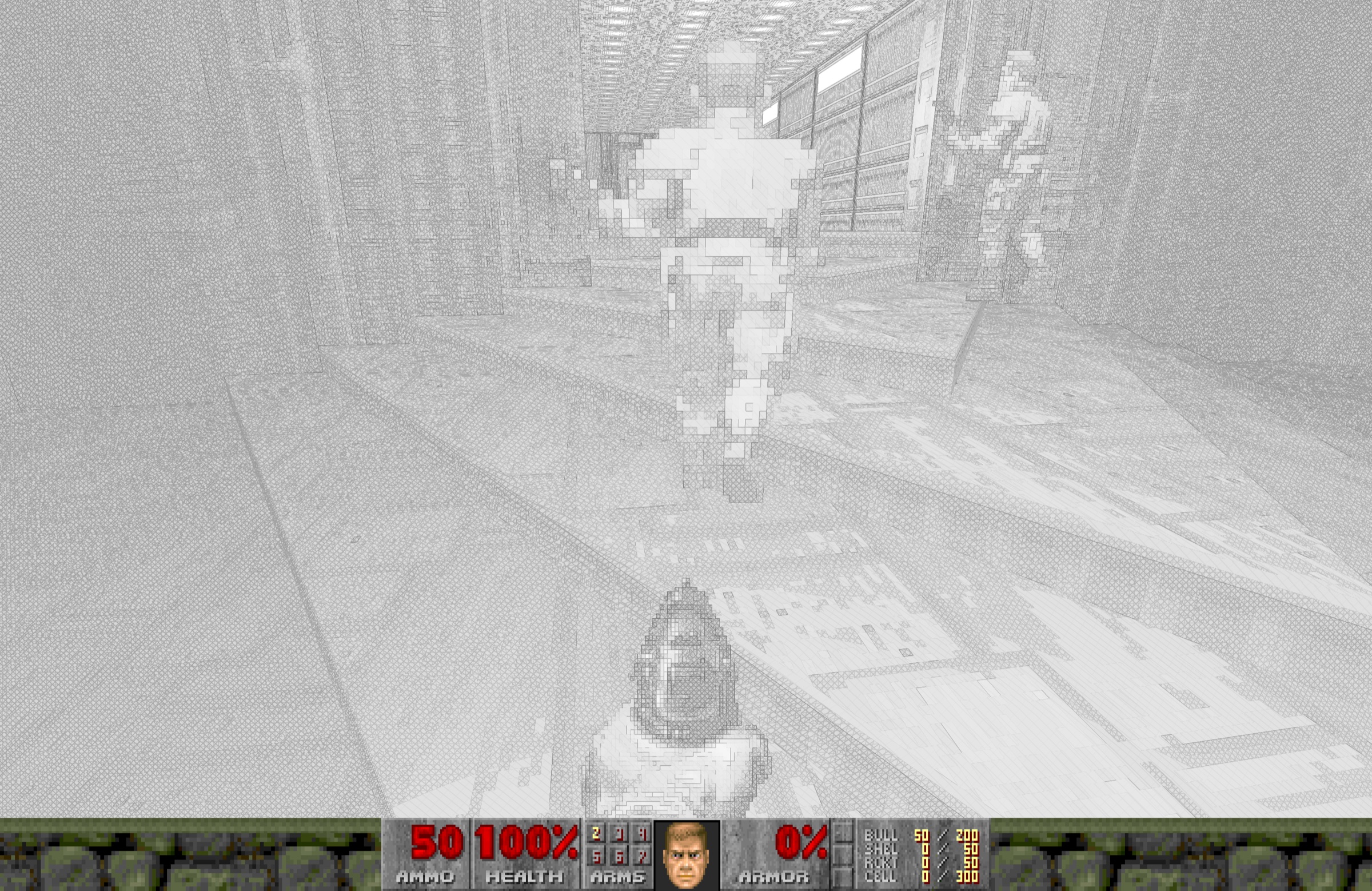
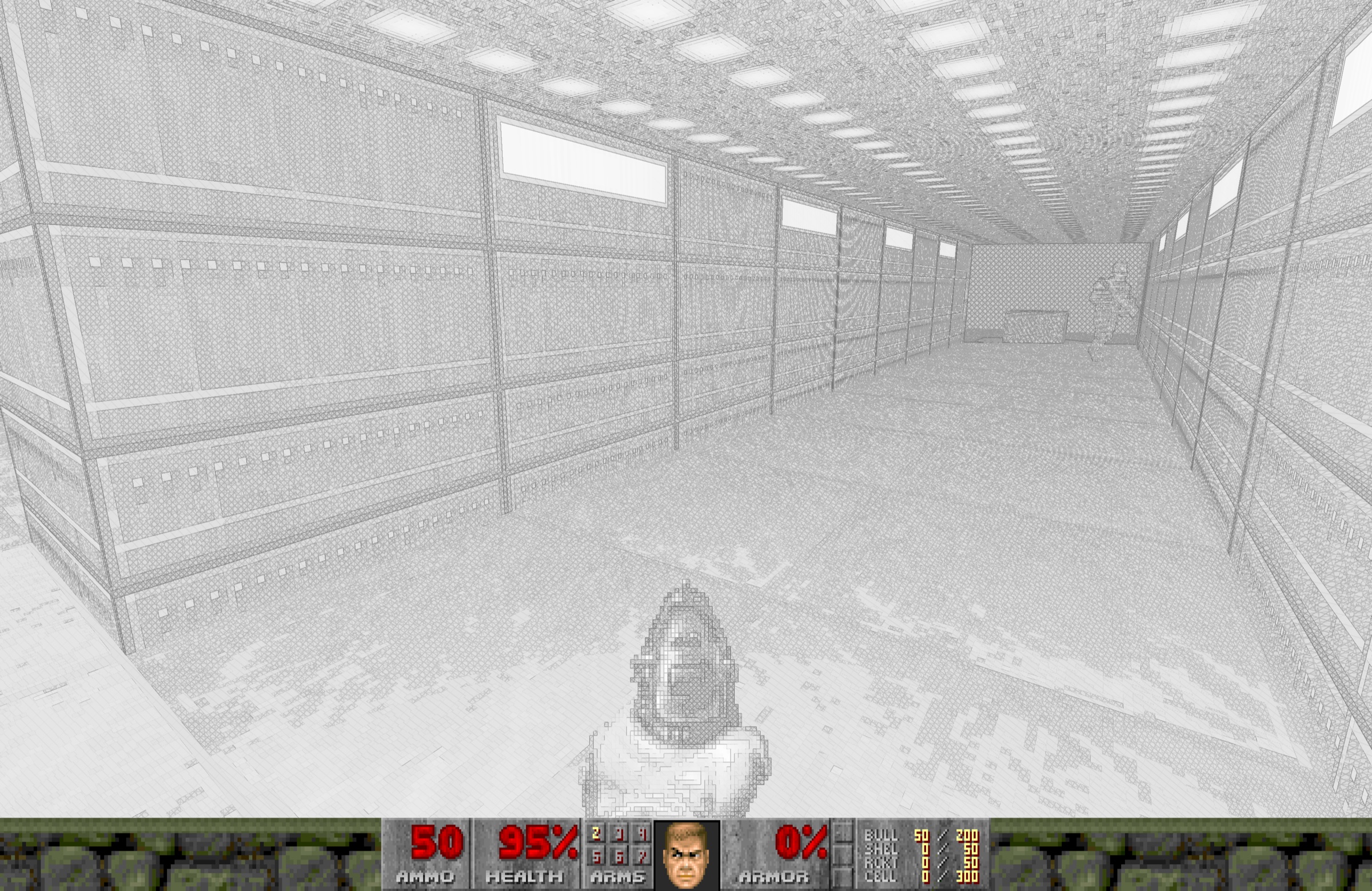
A non-photorealistic post-process for GZDoom that turns scene brightness into pen-and-ink hatching, with optional Sobel outlines and every knob exposed as a CVar.
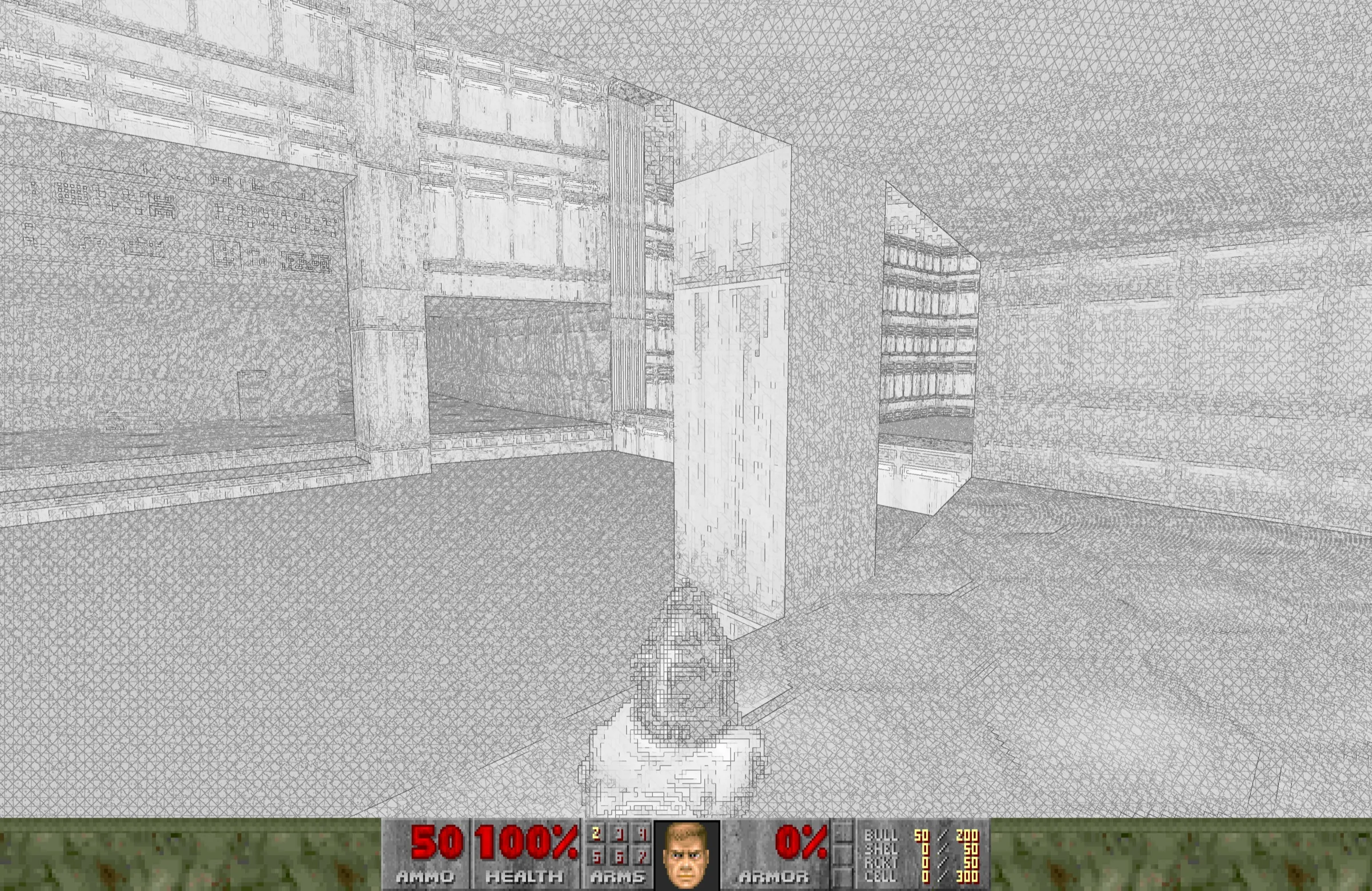
This is a configurable post-process NPR style for GZDoom. Scene luminance becomes hatch density, optional Sobel outlines add ink definition, and the whole look can be toggled at runtime through CVars.
Goal
Deliver a comic/etching visual treatment that is practical in actual gameplay: readable, adjustable, and easy to distribute as a single PK3.
The current scope prioritizes a robust screen-space implementation over deeper material-level integration. In v0-M3 the effect is intentionally post-process only. That keeps compatibility high on stock GZDoom hardware renderers and avoids the complexity of per-material world-space hatching.
Pipeline
GLDEFSregistershatch.fpas a post-process shader and binds CVar uniforms.CVARINFOexposes runtime controls for hatch, breakup, tone, and outlines.MAPINFOandZSCRIPT.lmpregisterHatchHandlerfor integration.shaders/PostProcess/hatch.fpcomputes the full NPR stylization pass.
Shader approach
- Sample
InputTextureand compute luminance. - Quantize darkness into configurable bands (
hatch_bands). - Build procedural hatch masks from stripe functions plus breakup layers:
hatch_stipple,hatch_grain, andhatch_jitter. - Increase dark-area density with adaptive scale (
hatch_dark_density). - Apply optional 3-tap smoothing (
hatch_softness) to reduce shimmer. - Composite ink with scene/base tone using
hatch_strength,hatch_bw, andhatch_flat_tone. - Optionally add Sobel outlines via
outline_enable,outline_strength, andoutline_threshold.
Limitations
- Resolution-bound line quality. Hatch detail is pixel-space (
gl_FragCoord), so low render resolutions collapse strokes and high resolutions can reveal aliasing unless retuned. - Motion shimmer and moiré. Repeated line frequencies can alias in camera motion; softness and breakup help but don’t fully remove temporal artifacts.
- Screen-space drift. Patterns don’t lock to world geometry/UVs, so hatching can slide over surfaces during viewpoint changes.
- Global coverage. The effect applies scene-wide, including HUD and sprites, which requires careful strength tuning for readability.
- NPR is subjective. There’s no single correct stylization across all maps and lighting conditions; scene-specific CVar adjustments remain part of production use.
